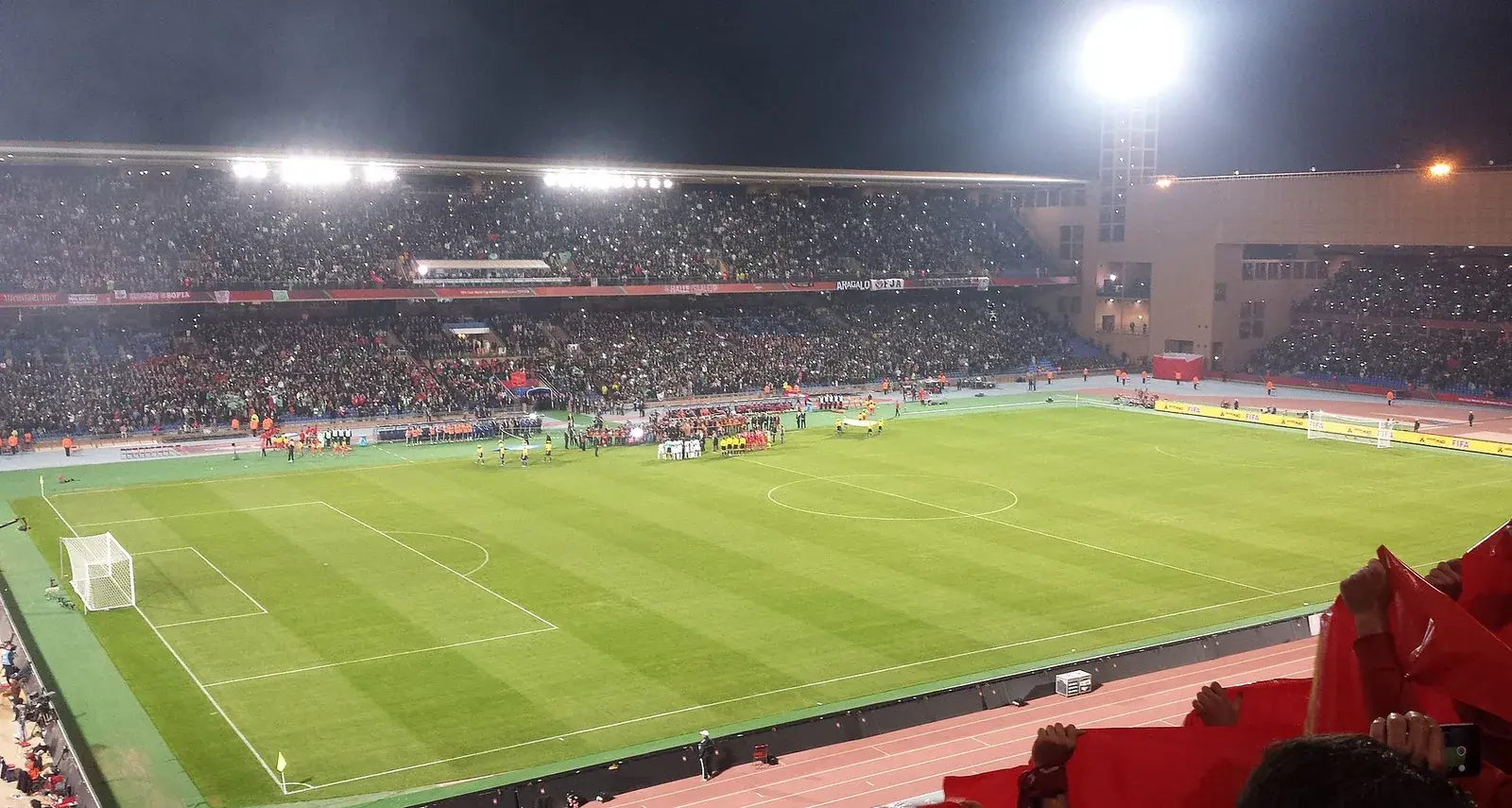
Stade de Marrakech
Photo: Wikimedia Commons contributors · CC BY-SA
Overview
About the stadium
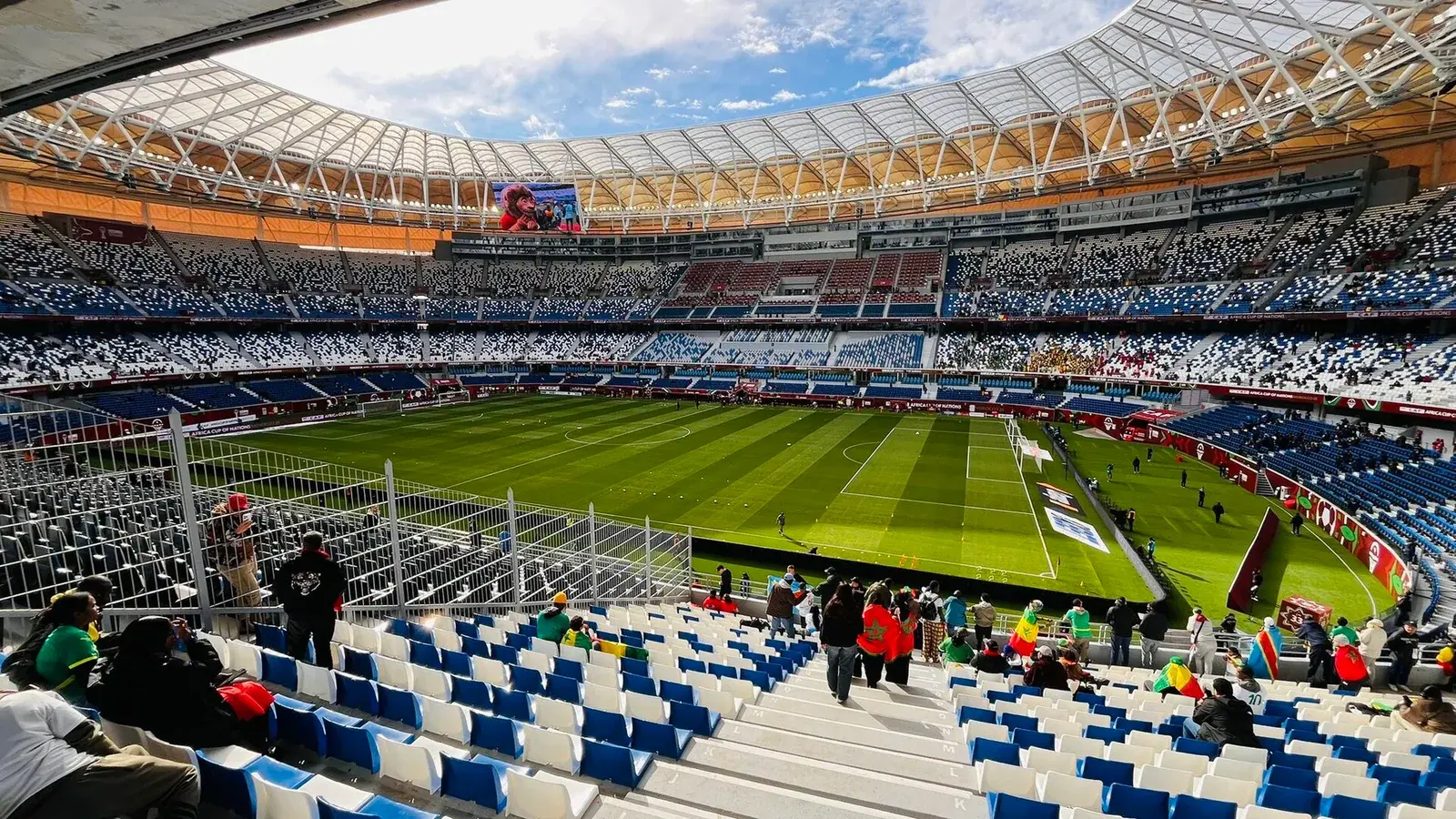
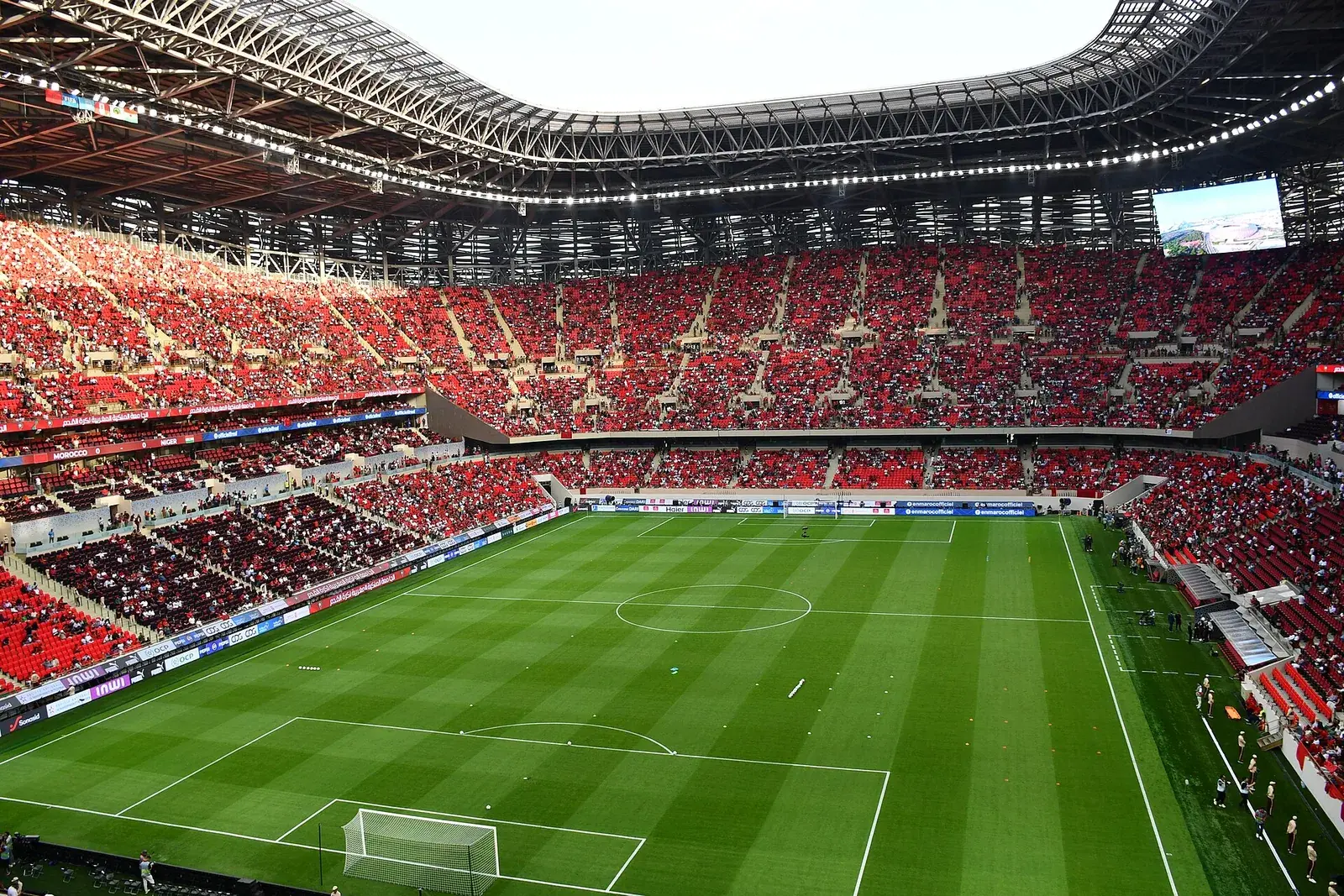
Stade de Marrakech is a modern football stadium in Marrakech, one of Morocco's most iconic cities and a major international tourist destination. With a capacity of 45,240 seats, it ranks among the largest venues in the country and stands as a landmark achievement of Morocco's early-2000s sports infrastructure drive. The stadium was designed by Italian architect Vittorio Gregotti, whose studio also drew up the sister venue Adrar Stadium in Agadir.
Location and surroundings
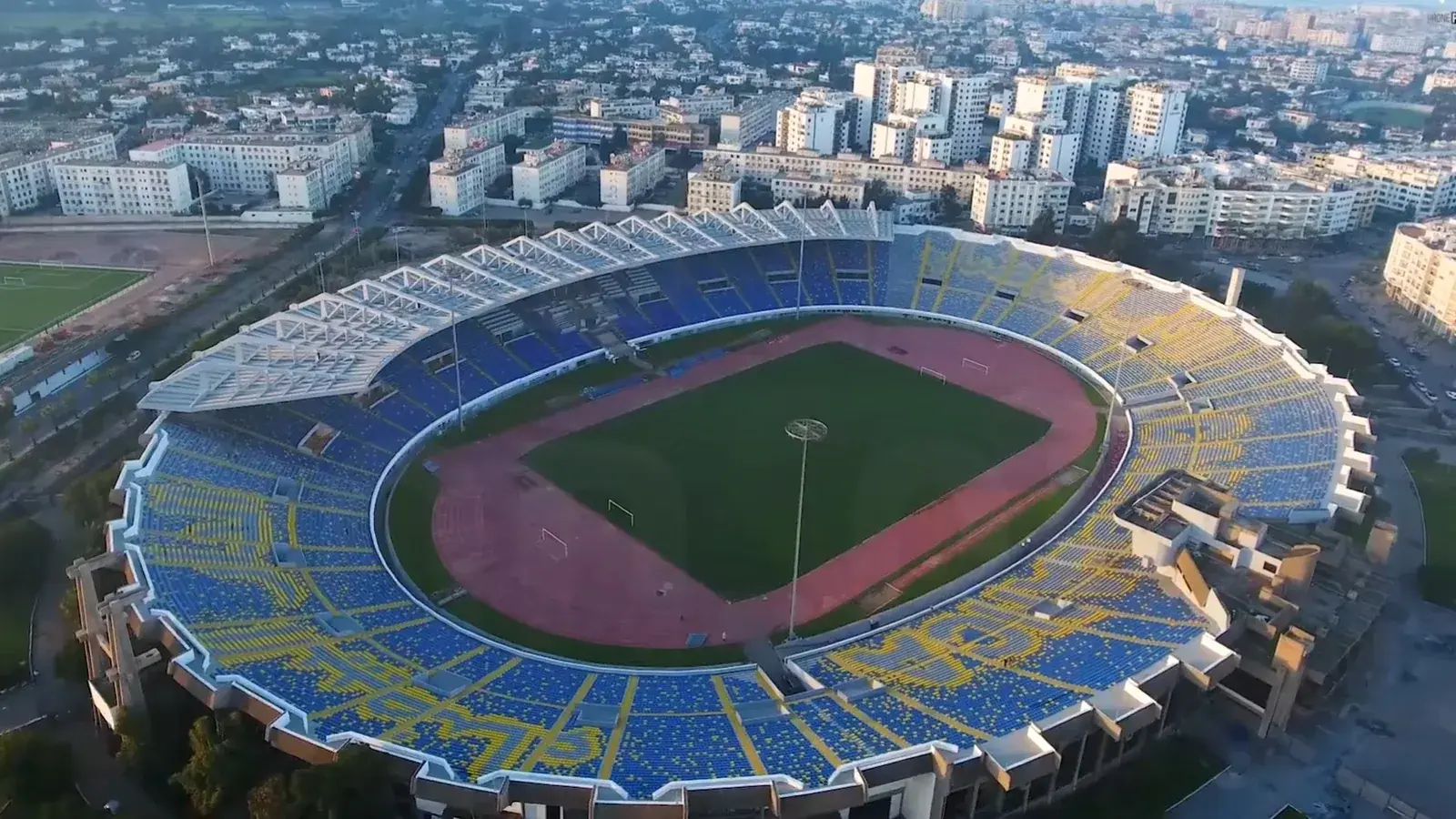
The arena sits in the north-eastern part of Marrakech, near the ring road connecting the city to the A7 motorway towards Casablanca. Marrakech is Morocco's second-most-visited tourist city and is served by Marrakech Menara International Airport approximately 6 km from the historic medina. The stadium's immediate surroundings are modern and residential; the UNESCO-listed medina, Djemaa el-Fna square and the souks are roughly 20 minutes away by taxi.
Main uses
The stadium serves as the home ground of Kawkab Athletic Club Marrakech (KACM) in Botola Pro, Morocco's top-flight league. It also hosts Morocco national team fixtures and major international competitions. Its defining role to date has been as venue for the 2013 and 2014 FIFA Club World Cup, when Marrakech shared hosting duties with Agadir, staging both tournament finals.
History
Journey through time
Stade de Marrakech was constructed as part of Morocco's wave of stadium development in the early 21st century, driven by the country's ambitions to host world-class international tournaments. The Moroccan government commissioned Italian firm Gregotti Associati International, led by architect Vittorio Gregotti, who simultaneously designed the Adrar Stadium in Agadir. The stadium was completed and opened in 2011.
Construction and opening
The stadium opened in 2011 after roughly two years of construction. Gregotti's design is defined by sweeping arched roof trusses and a light-coloured facade incorporating geometric decorative motifs drawn from Moroccan artisan traditions. The 45,240-seat fully covered bowl provides comfortable conditions for spectators and meets FIFA's highest technical requirements. From day one the venue was equipped to host top-level international football.
Major renovations
Since its opening the stadium has received incremental upgrades, including LED floodlighting, pitch irrigation improvements and expanded broadcast and media facilities. As part of Morocco's preparations for co-hosting World Cup 2030 with Spain and Portugal, further investment is planned to align the ground with the latest FIFA standards ahead of the tournament.
Notable moments
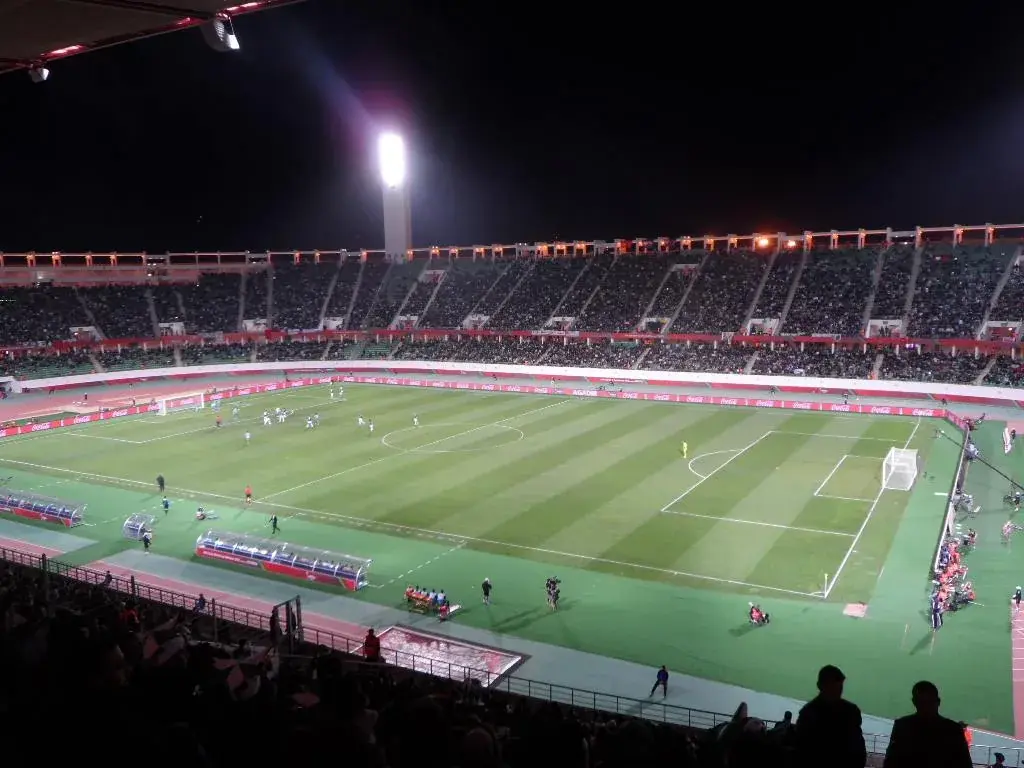
The stadium's most celebrated chapter is its back-to-back hosting of two FIFA Club World Cup finals. In December 2013 Bayern Munich defeated Raja Casablanca 2-0 here to claim the title, becoming the first German club to be crowned world champions. Twelve months later, in December 2014, Real Madrid beat San Lorenzo 2-0 at the same venue. These two consecutive finals make Stade de Marrakech one of a handful of stadiums worldwide to have hosted the FIFA Club World Cup final more than once.
Atmosphere
Matchday
Marrakech is a city of international tourism, yet the passion of its local football community is entirely authentic. KACM (Kawkab Athletic Club Marrakech) -- a club with roots stretching back to the 1940s -- anchors football life in the city and its supporters bring an unmistakably North African intensity to the stadium on matchdays.
Fan culture
KACM's main ultras group flies the club's traditional red-and-black colours, producing choreographies that blend Moroccan drumming traditions with tifo displays inspired by European ultras culture. Because Marrakech is a cosmopolitan tourist hub, bigger home fixtures attract visitors from Europe and the Middle East alongside the local faithful, giving the ground a genuinely international flavour. Fixtures against Casablanca giants Wydad and Raja produce the most charged atmospheres of the domestic calendar. For Moroccan national team games the ground fills with supporters from across southern Morocco.
Big matches
The undisputed pinnacle was the 2013 FIFA Club World Cup final (Bayern Munich 2-0 Raja Casablanca) followed by the 2014 FIFA Club World Cup final (Real Madrid 2-0 San Lorenzo). Both events drew a global audience and transformed the stadium into a genuine international stage. The 2013 final carried extraordinary local emotion, as African representative Raja Casablanca played in front of a partisan Moroccan crowd. For Moroccan football history, these two finals are defining moments that elevated Stade de Marrakech to global recognition.
Practical info
Visiting the stadium
Stade de Marrakech is located in the north-eastern part of Marrakech, approximately 7 km from the historic medina and around 6 km from Marrakech Menara International Airport. Marrakech is one of Africa's busiest tourist destinations, with direct flights from dozens of European cities.
How to get there
- Petit taxi: The small beige metered taxis of Marrakech are the easiest option; the ride from the medina takes 15--25 minutes depending on traffic and costs around 30--50 dirhams (approximately EUR 3--5).
- Car or rideshare: Apps such as Careem and InDrive operate reliably in Marrakech; the stadium has ample parking for private vehicles.
- City bus: The ALSA Marrakech urban bus network connects the city centre with the stadium area -- a cheaper but slower alternative.
- Matchday shuttles: For high-profile fixtures, shuttle services from the city centre and Gueliz train station are sometimes arranged -- check with the event organiser in advance.
Tickets and tours
Tickets for KACM matches are available at the stadium box office or through Moroccan ticketing distributors. For national team and FIFA events, tickets are sold via the FRMF (Fédération Royale Marocaine de Football) or the relevant governing body. Organised stadium tours are not a regular offering -- contact KACM administration directly if you wish to visit outside a matchday.
Visitor tips
- When to arrive? Plan to arrive 45 minutes before kick-off -- the streets around the stadium come alive with vendors selling food, scarves and souvenirs, creating a vibrant pre-match atmosphere.
- What to wear? Summer temperatures in Marrakech regularly exceed 40 °C, while winter evenings can drop to around 10 °C -- dress accordingly for the season.
- Where to stay? The historic medina and the modern Guéliz district offer hundreds of riads and hotels at every price point, all 15--25 minutes by taxi from the stadium.
- Combine with sightseeing: Marrakech offers exceptional tourism beyond football -- Djemaa el-Fna square, the souks, Majorelle Garden and day trips into the Atlas Mountains can all be combined with a matchday visit.
Clubs & teams
%20Logo%20png.png)
Map
Where to find the stadium
Rating
Your rating
No ratings yet
Plan your visit
Marrákeš, Morocco
Accommodation
Booking.com — affiliate ID not configured
Stadium tour
GetYourGuide — partner ID not configured
Match tickets
Ticombo — affiliate ID not configured
Some links are affiliate — if you purchase, we earn a small commission (no extra cost to you).