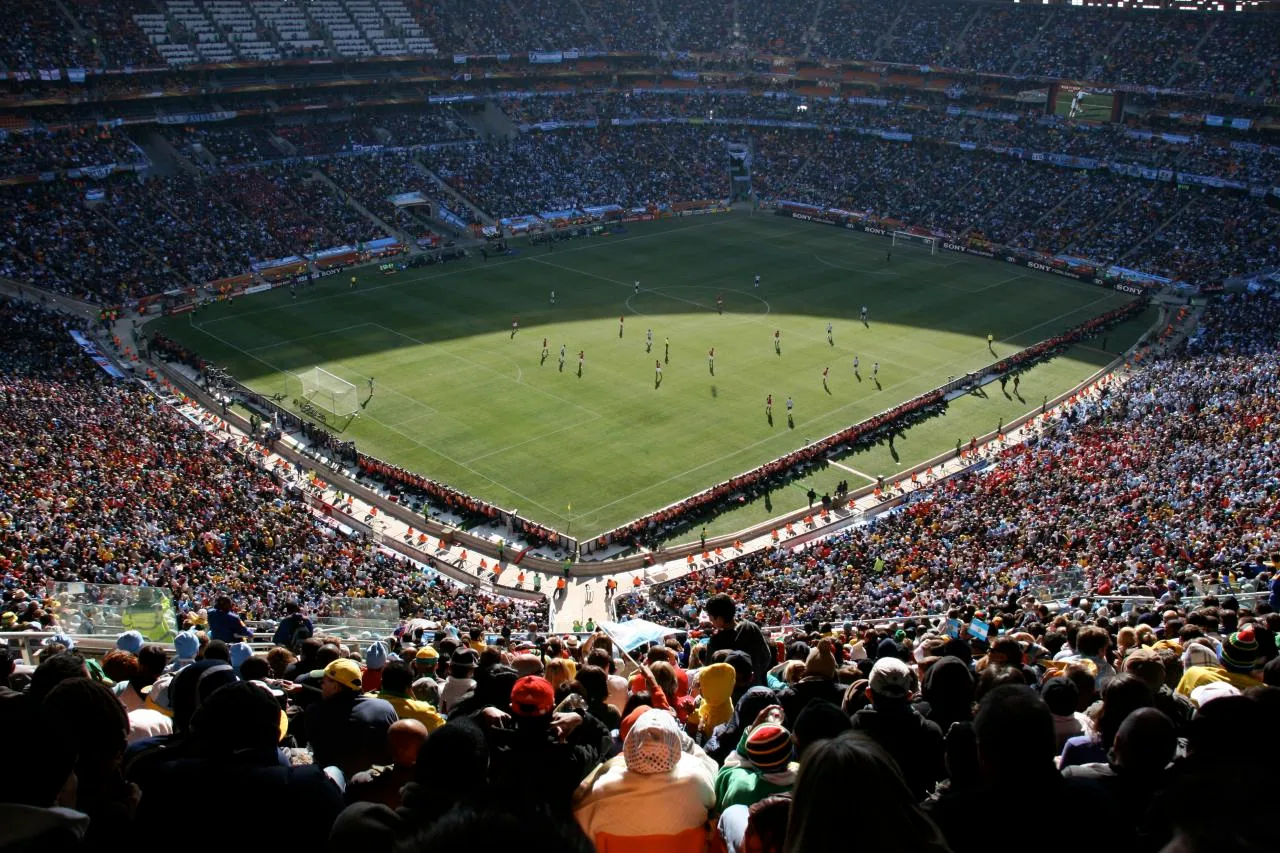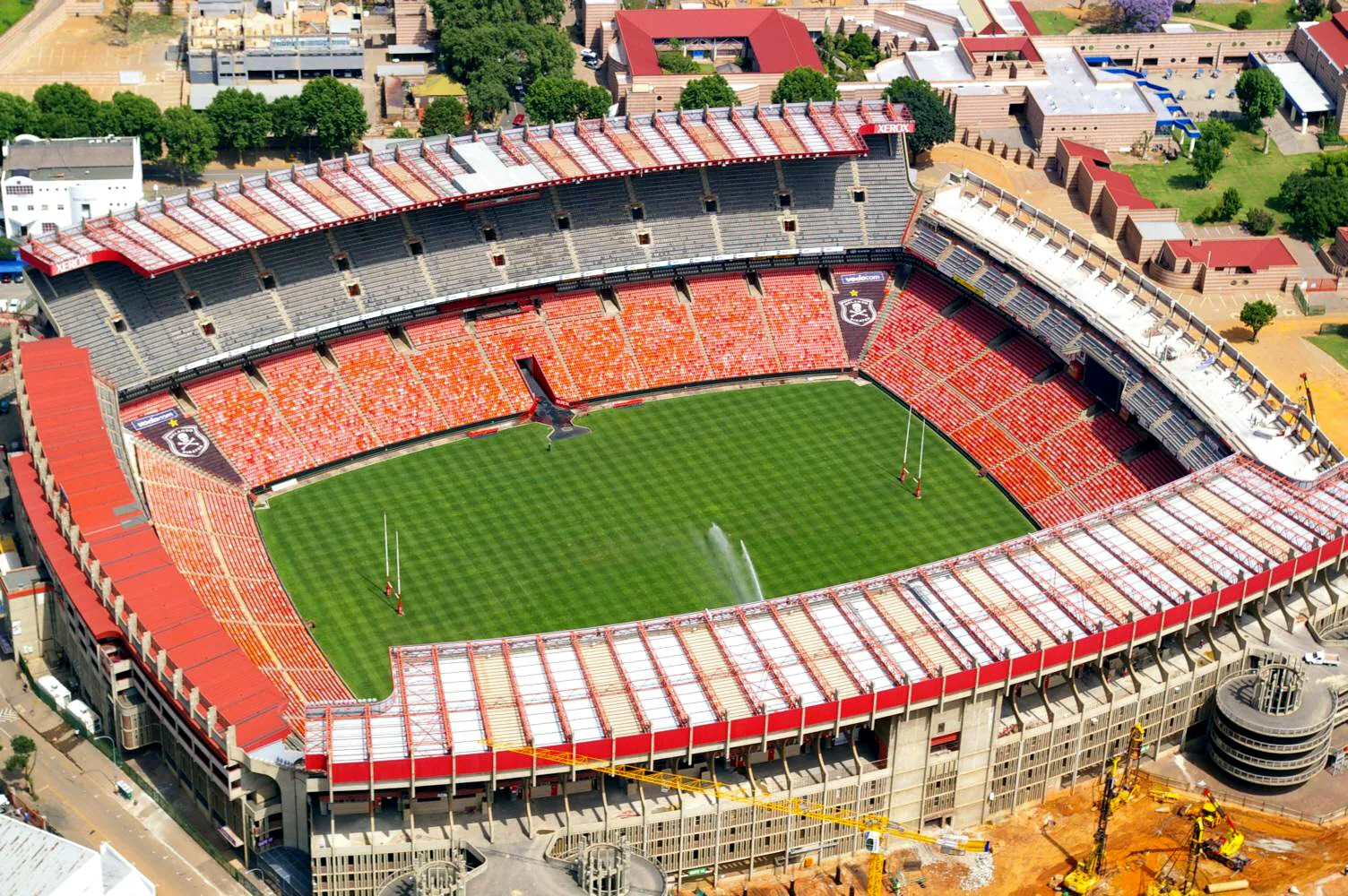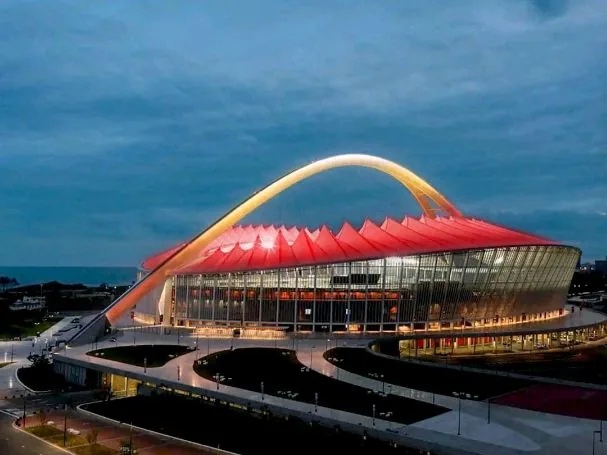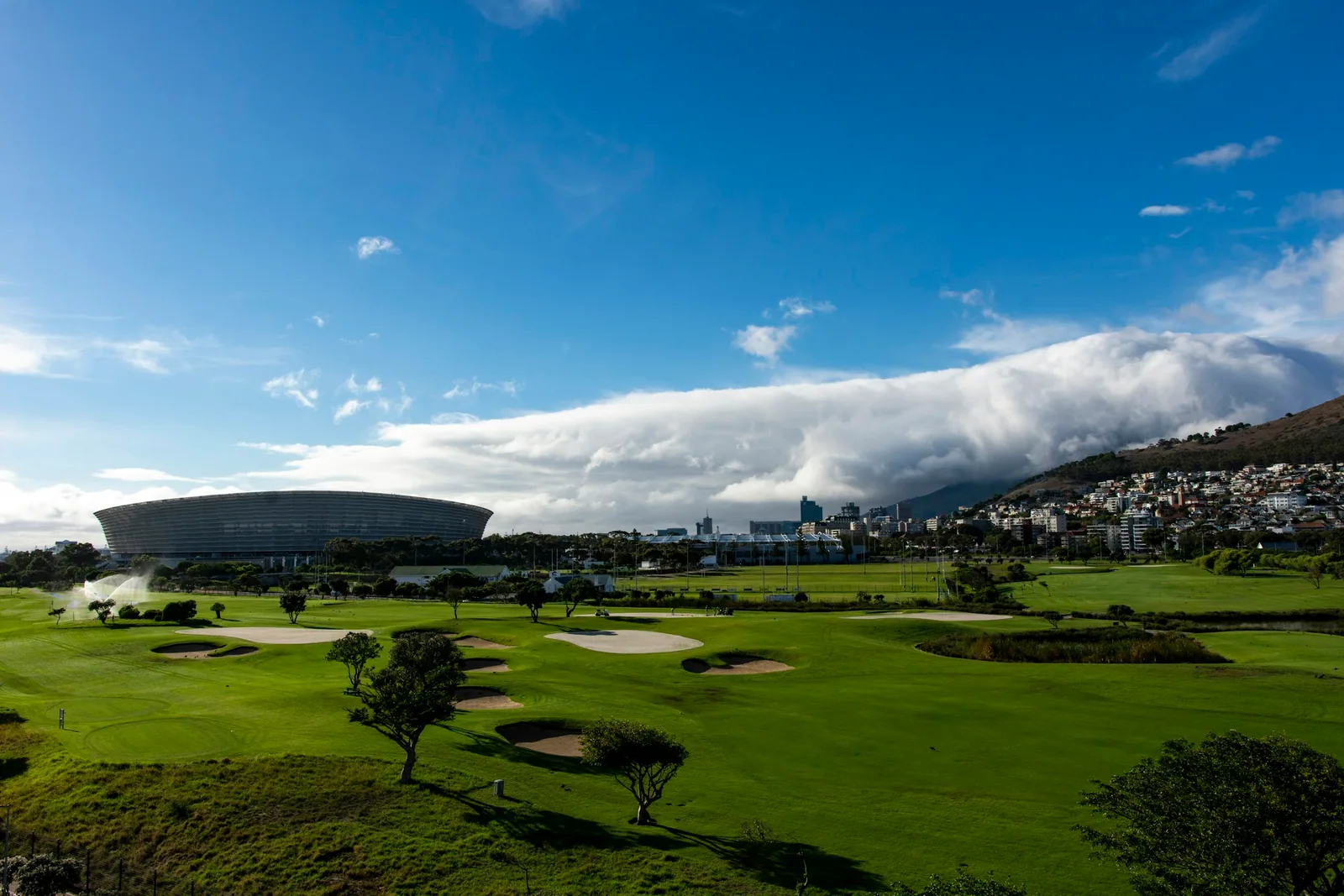
Free State Stadium
Foto: Wikimedia Commons contributors · CC BY-SA
- Kapacita
- 42 000
- Postaven
- 1955
- Země
- South Africa
Přehled
O stadionu
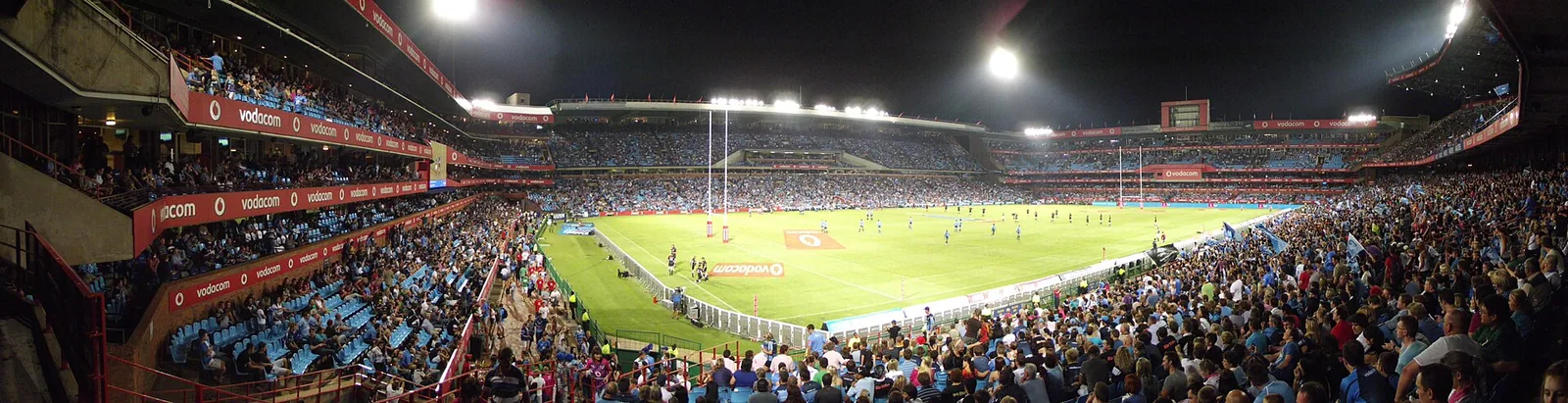
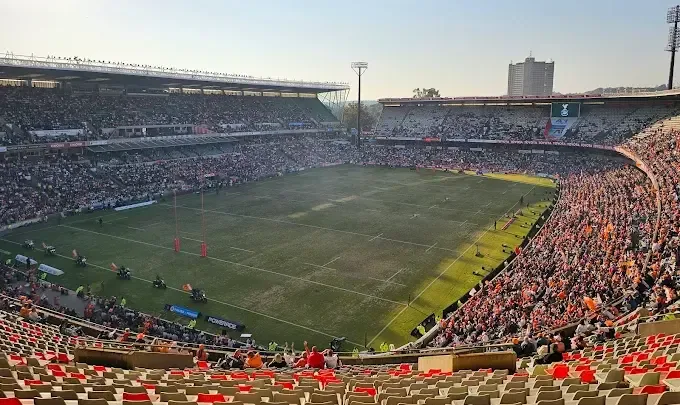
Free State Stadium -- currently known as the Toyota Stadium for sponsorship purposes and formerly Vodacom Park -- is a multi-purpose arena in Bloemfontein, the judicial capital of South Africa and administrative capital of the Free State province. With a capacity of 48,000 spectators, it is primarily a rugby union venue and serves as the permanent home of the Cheetahs franchise in the United Rugby Championship. It also hosted six matches at the 2010 FIFA World Cup, including one Round of 16 fixture.
Originally built in 1952, the stadium underwent major renovations ahead of both the 1995 Rugby World Cup and the 2010 FIFA World Cup, each time expanding its capacity and modernising its infrastructure. Football club Bloemfontein Celtic F.C. historically used the ground as a secondary tenant until the club folded in 2021.
Setting and city
Bloemfontein lies on the semi-arid Highveld plateau at roughly 1,400 m above sea level, giving it a continental climate of hot summers and cold winters that distinguishes it sharply from the coastal stadium cities. The stadium sits in the Universitas suburb on the city's northern edge, surrounded by open parkland and university grounds -- a relaxed, unhurried setting compared to the urban arenas of Johannesburg or Cape Town.
Role in South African sport
The Free State Stadium is the symbolic heartland of Free State rugby, a tradition deeply rooted in the province's Afrikaans-speaking communities. Beyond sport it is also an established entertainment venue that has hosted major international touring acts.
Historie
Cesta časem
The origins of Free State Stadium trace back to 1952, when the first grandstand was erected on a plot in the Universitas suburb granted to the Free State Rugby Union by the municipal authorities. In its early decades the facility was modest -- a single covered stand with open grass banks on three sides -- but it served as the uncontested home of provincial rugby in the Free State for four decades.
1995 Rugby World Cup
The stadium's first major transformation came in 1994--1995 ahead of the Rugby World Cup 1995, the first edition of the tournament played in post-apartheid South Africa. The event carried enormous symbolic weight: President Nelson Mandela wore a Springboks jersey during the final at Ellis Park, and the entire nation -- across racial and linguistic lines -- rallied behind the home team. Bloemfontein hosted several pool matches, including fixtures involving Canada and Romania. Free State Stadium was woven into the wider national narrative of reconciliation that the tournament so powerfully represented.
2010 FIFA World Cup upgrades
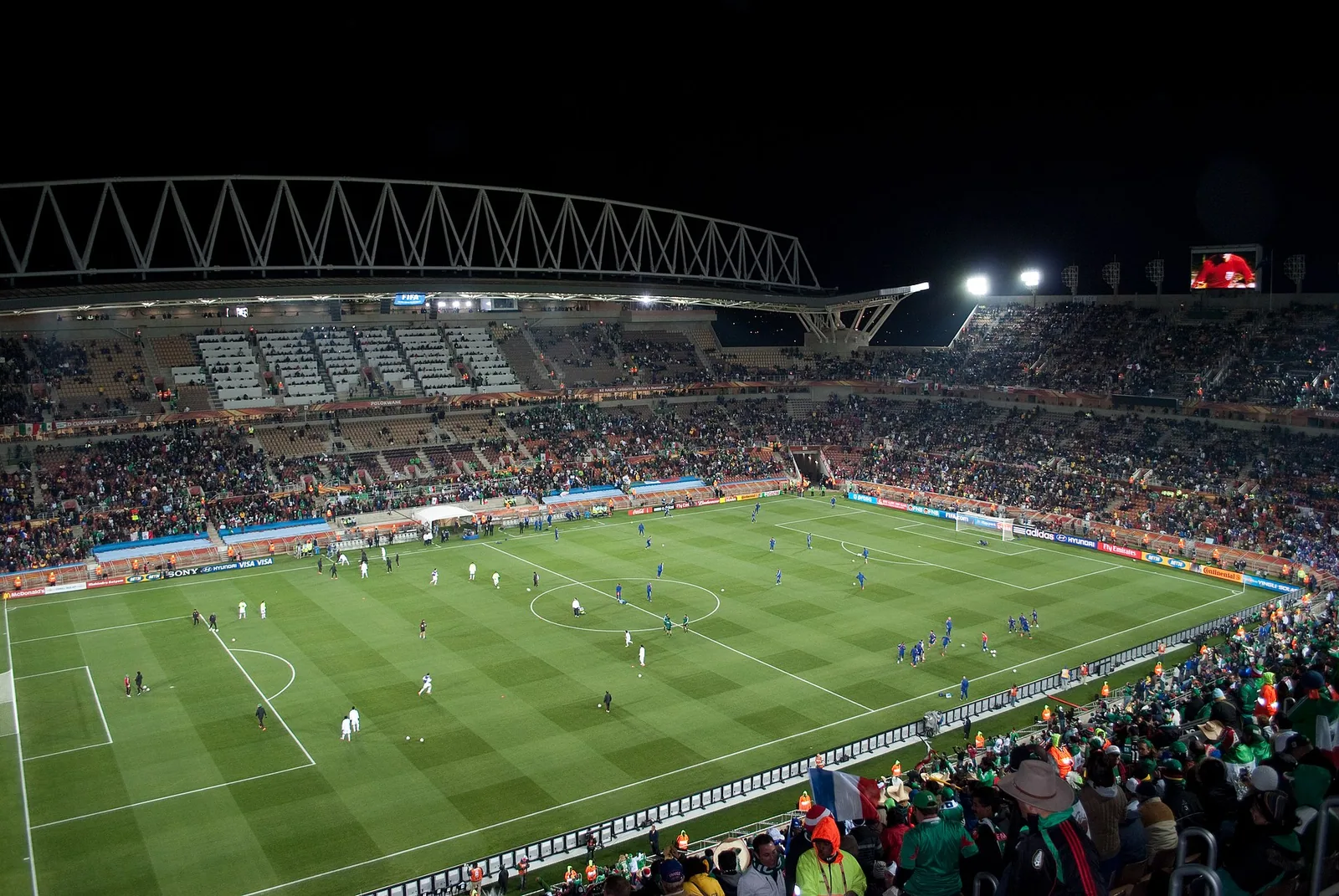
Between 2007 and 2009 the stadium was substantially rebuilt under the FIFA World Cup infrastructure programme. The North Stand's terracing was replaced with fixed seating, the East Stand received a new roof, and overall capacity was raised to a certified 48,000 places. During the 2010 FIFA World Cup the stadium hosted six matches: five group-stage fixtures and one Round of 16 -- Uruguay 2:1 South Korea (26 June 2010). Diego Forlan scored twice in that match, propelling Uruguay on a run that would take them all the way to the semi-finals.
Name history
The venue has traded under three names: Free State Stadium (until 2000), Vodacom Park (2000--2013), and Toyota Stadium (2013--present). Despite the successive commercial rebranding, local supporters and media routinely refer to it simply as 'the Free State Stadium', preserving the identity the ground has held since its founding.
Atmosféra
Den zápasu
The atmosphere at Free State Stadium is shaped above all by the deep rugby culture of the Free State province. Cheetahs supporters are among the most passionately loyal in South African rugby -- multigenerational families who have followed the amber-and-black jersey since the amateur era, long before franchises and television contracts entered the picture.
Cheetahs matchday culture
On Cheetahs home days the stadium takes on the character of a provincial gathering rather than merely a sporting fixture. Braai smoke, Afrikaans banter and the distinctive orange jerseys of the Free State define the experience. The East Stand is the vocal heart of the ground, with the covered western grandstand offering a quieter vantage point. Compared to the polished corporate environments of the larger arenas in Johannesburg and Cape Town, Free State Stadium retains an authentically grassroots quality that many supporters find more engaging.
World Cup legacy
The 2010 FIFA World Cup brought an entirely different crowd to Bloemfontein -- supporters from every continent, many experiencing their first taste of South African culture. The most discussed fixture played at the ground was the group-stage game England 0:0 Algeria (18 June 2010), after which England's players were whistled off by their own travelling supporters. The Round of 16 clash Uruguay 2:1 South Korea produced a more joyful memory, with Diego Forlan's two-goal performance earning Man of the Match in what proved to be a defining game of the tournament.
Provincial rivalry
The fiercest rivalry played out on this turf is the clash between the Cheetahs and the Bulls of Pretoria -- a contest underpinned by provincial pride, linguistic identity and decades of shared history. When the Bulls visit Bloemfontein the stadium fills close to capacity and the atmosphere reaches its sharpest intensity.
Praktické info
Návštěva stadionu
Free State Stadium is located in the Universitas suburb of Bloemfontein, approximately 5 km north-east of the city centre. The postal address is Selbourne Avenue, Universitas, Bloemfontein, 9301.
Getting there
- By car: The most practical option -- the stadium has a large dedicated car park accommodating several thousand vehicles. On big matchdays, plan to arrive at least 60 minutes early to avoid queues on Selbourne Avenue.
- Rideshare / taxi: Bolt and Uber operate reliably in Bloemfontein; a ride from the city centre takes roughly 10--15 minutes.
- Shuttle: For major fixtures the Cheetahs organisation and the municipality typically run shuttle services from designated park-and-ride points in the city centre. Check the club website for details ahead of each match.
- By air: Bram Fischer International Airport is approximately 15 km from the stadium; taxis and rideshare services connect the two in around 20 minutes.
Tickets
Cheetahs tickets for United Rugby Championship and Heineken Champions Cup matches are sold via Computicket, South Africa's leading ticketing platform, and at the stadium box office on matchday. High-profile fixtures sell out in advance, so pre-purchasing is strongly recommended.
Visitor tips
- Weather: At 1,400 m altitude, Bloemfontein has extreme temperature swings. Summer afternoon matches (January--March) can reach 35 degrees C; winter evening fixtures (June--August, peak rugby season) regularly drop below 5 degrees C -- a warm layer is essential.
- Food and drink: The stadium concourses offer standard South African matchday fare including boerewors rolls, peri peri chicken and local beers. The Universitas and Westdene neighbourhoods nearby have restaurants suitable for pre- and post-match dining.
- Safety: The stadium precinct is well-policed during events. Standard urban precautions apply in the surrounding area -- avoid leaving valuables in unattended vehicles.
Kluby a týmy
Mapa
Kde najdeš stadion
Hodnocení
Tvoje hodnocení
Zatím bez hodnocení
Naplánuj návštěvu
Bloemfontein, South Africa
Ubytování
Booking.com — affiliate ID není nakonfigurováno
Stadium tour
GetYourGuide — partner ID není nakonfigurováno
Vstupenky
Ticombo — affiliate ID není nakonfigurováno
Některé odkazy jsou affiliate — pokud nakoupíš, dostaneme malou provizi (cena pro tebe se nemění).