Cape Town Stadium
Foto: · Unsplash License · zdroj
- Kapacita
- 55 000
- Postaven
- 2009
- Země
- South Africa
Přehled
O stadionu
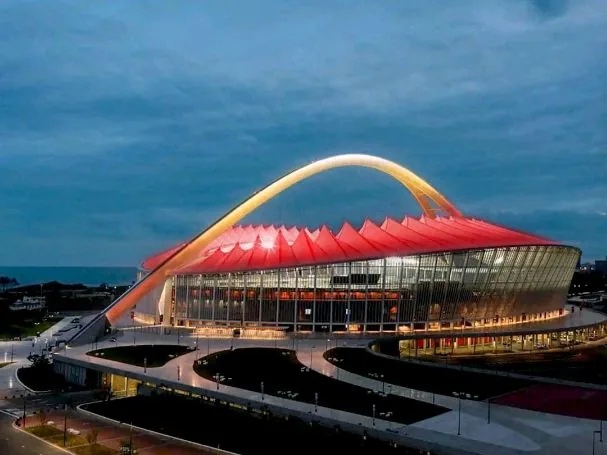
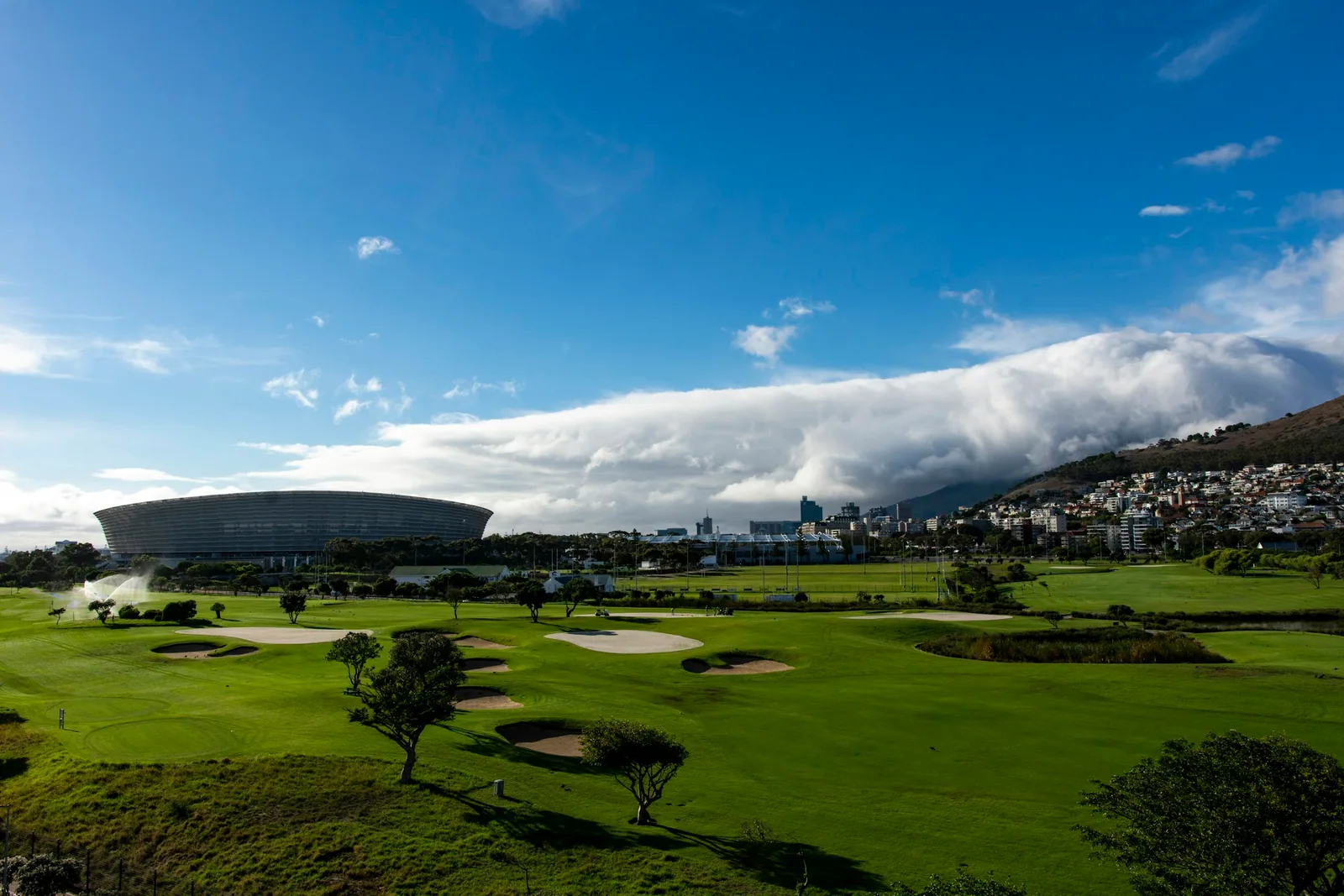
Cape Town Stadium is a striking multi-purpose arena on the Atlantic coast of Cape Town, South Africa, instantly recognisable for its luminous translucent shell that glows at night against the backdrop of Table Mountain. Built specifically for the 2010 FIFA World Cup, the stadium holds 64,100 spectators and was designed by the German firm Gerkan, Marg and Partners. It is widely regarded as one of the most beautiful sporting venues on the African continent.
Location and surroundings
The stadium sits in the Green Point neighbourhood, metres from the Atlantic Ocean shoreline, with unobstructed views of Table Mountain and Signal Hill. Few football grounds in the world offer a comparable natural setting. The adjacent Green Point Urban Park provides parkland, tennis courts and recreational spaces, making the area a popular destination year-round.
Main uses
The stadium is the home ground of Cape Town City F.C. in the South African Premier Soccer League and also hosts Stormers rugby matches in the United Rugby Championship as well as South Africa Springboks test fixtures. The venue's central tourist location makes it a favoured destination for major concerts and international events throughout the calendar year.
Historie
Cesta časem
Cape Town Stadium owes its existence entirely to South Africa's hosting of the 2010 FIFA World Cup -- the first edition of the tournament held on African soil. Cape Town, the country's second most-visited city and a major international tourist hub, was a natural host city, but the existing Newlands Stadium was not considered suitable for a global event of this magnitude.
Construction and opening
The city commissioned Gerkan, Marg and Partners (GMP Architekten) to design the new venue. The defining feature of their design is a spectacular roof structure covering over 47,000 m², clad in translucent polycarbonate panels that illuminate the surrounding neighbourhood after dark. Construction began in 2006 and the stadium was inaugurated in March 2009, more than a year before the World Cup kicked off.
Major renovations
Following the 2010 World Cup, the stadium underwent a series of interior upgrades to serve permanent tenants more effectively, including the addition of commercial facilities, improved club facilities and upgrades to the sound and lighting systems. The capacity has remained unchanged at 64,100.
Notable moments
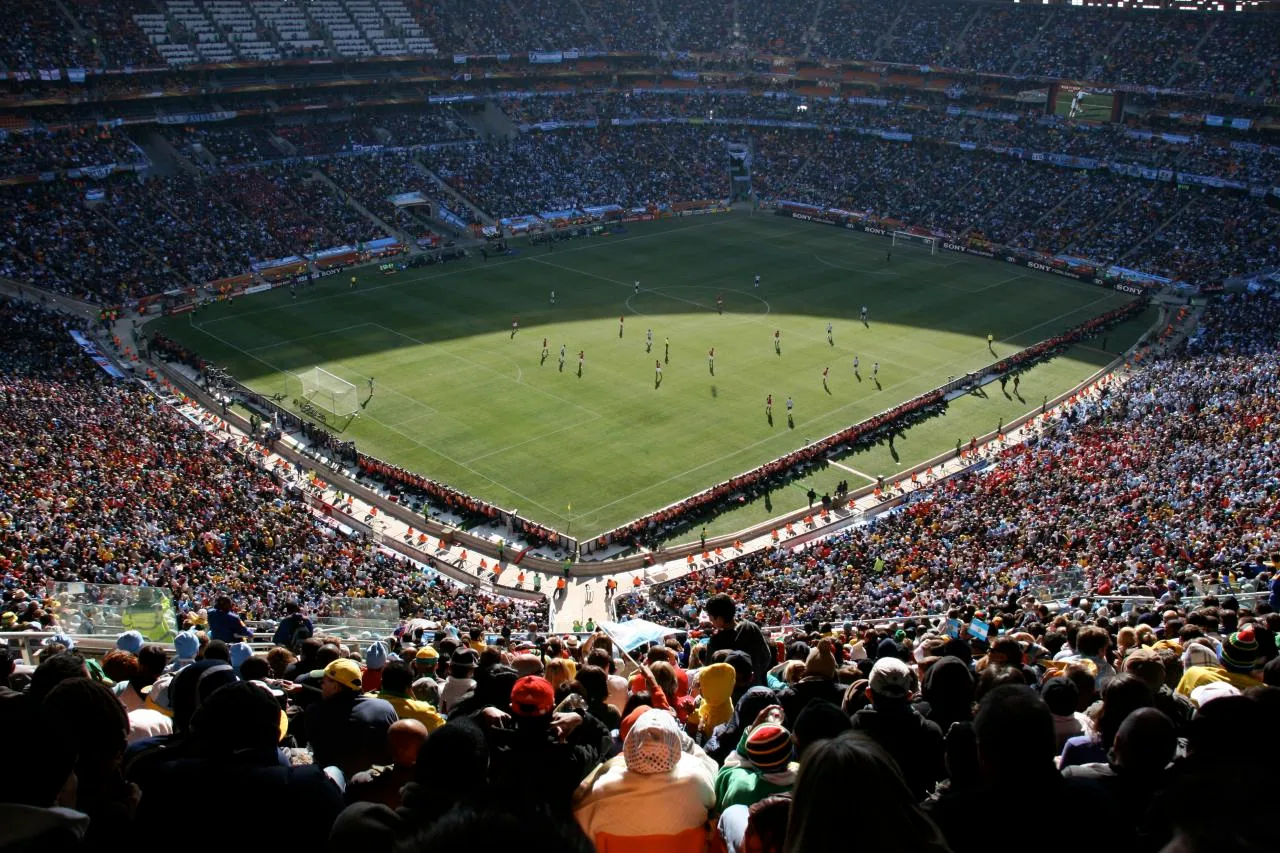
During the 2010 World Cup, Cape Town Stadium hosted eight matches, most memorably the quarter-final between Uruguay and Ghana -- one of the tournament's most dramatic encounters. Ghana fell to Uruguay on penalties after Luis Suárez was sent off for deliberately handling the ball on the goal line in extra time. The stadium also hosted a group-stage match involving Spain, the eventual champions of the tournament.
Atmosféra
Den zápasu
The atmosphere inside Cape Town Stadium is shaped by a rare combination of architecture, coastal geography and the passionate diversity of Cape Town's sporting public. The sweeping translucent roof creates a natural sound bowl, while the ever-present Atlantic wind and the silhouette of Table Mountain in the background give the venue an almost cinematic quality unique in world football.
Fan culture
The stadium's primary football tenants are Cape Town City F.C. -- founded in 2016 and quickly establishing a loyal following among Cape Town's cosmopolitan population. Supporters are known for an inclusive, colourful matchday culture that reflects the city's diversity. Stormers rugby supporters bring a different energy altogether -- western cape rugby has deep roots going back to the 19th century and big URC fixtures reliably fill the lower tiers with blue-clad fans. The venue's tourist-friendly location means that international visitors regularly make up a significant portion of the crowd.
Big matches
The most emotionally charged match in the stadium's history was the 2010 World Cup quarter-final between Uruguay and Ghana (1:1 after extra time, 4:2 on penalties), when the entire African continent seemed to will Ghana to victory. The Africa Cup of Nations 2013 final was also held here, drawing over 63,000 spectators. For the Stormers, the United Rugby Championship and Champions Cup knockout fixtures have produced the most passionate home nights in recent seasons.
Praktické info
Návštěva stadionu
Cape Town Stadium is located in the Green Point neighbourhood, approximately 3 km west of Cape Town city centre and within 500 metres of the Atlantic Ocean shoreline. The address is Fritz Sonnenberg Road, Green Point, Cape Town.
How to get there
- MyCiTi BRT bus: Route 107 connects Cape Town city centre and the V&A Waterfront with Green Point; the stop is directly adjacent to the stadium.
- On foot: A pleasant walk along the Sea Point Promenade from V&A Waterfront takes approximately 15--20 minutes.
- Uber/taxi: The most convenient option from further afield; a ride from the City Bowl takes 5--10 minutes outside peak hours.
- Car: Parking is available at the stadium, though on big matchdays the MyCiTi bus or walking from nearby is strongly advisable.
Tickets and tours
Tickets for Cape Town City F.C. matches are available via Ticketmaster South Africa and at the stadium box office. The stadium offers regular guided tours that include access to the pitch and views across to Table Mountain; these must be booked in advance through the official stadium website. Stormers rugby tickets are sold via the URC website and the club's own ticketing portal.
Visitor tips
- When to arrive? Allow 45--60 minutes before kick-off -- the Green Point and De Waterkant areas offer excellent pre-match dining options within easy walking distance.
- Is it family-friendly? Yes -- the stadium has dedicated family sections and the adjacent Green Point Urban Park is ideal for children before or after the match.
- What to bring? A windproof layer -- the Atlantic breeze at Green Point can be surprisingly cold even in summer, particularly for evening fixtures.
- Where to eat? The nearby De Waterkant village and V&A Waterfront have dozens of restaurants at every price point within 15--20 minutes on foot.
Kluby a týmy
Mapa
Kde najdeš stadion
Hodnocení
Tvoje hodnocení
Zatím bez hodnocení
Naplánuj návštěvu
Kapské Město, South Africa
Ubytování
Booking.com — affiliate ID není nakonfigurováno
Stadium tour
GetYourGuide — partner ID není nakonfigurováno
Vstupenky
Ticombo — affiliate ID není nakonfigurováno
Některé odkazy jsou affiliate — pokud nakoupíš, dostaneme malou provizi (cena pro tebe se nemění).