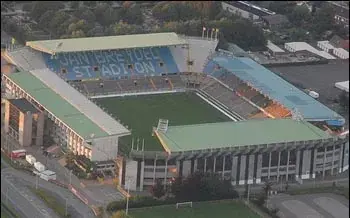
King Baudouin Stadium
Photo: Wikimedia Commons contributors · CC BY-SA
- Capacity
- 50,093
- Year opened
- 1930
- Club
- —
- Country
- Belgium
Overview
About the stadium
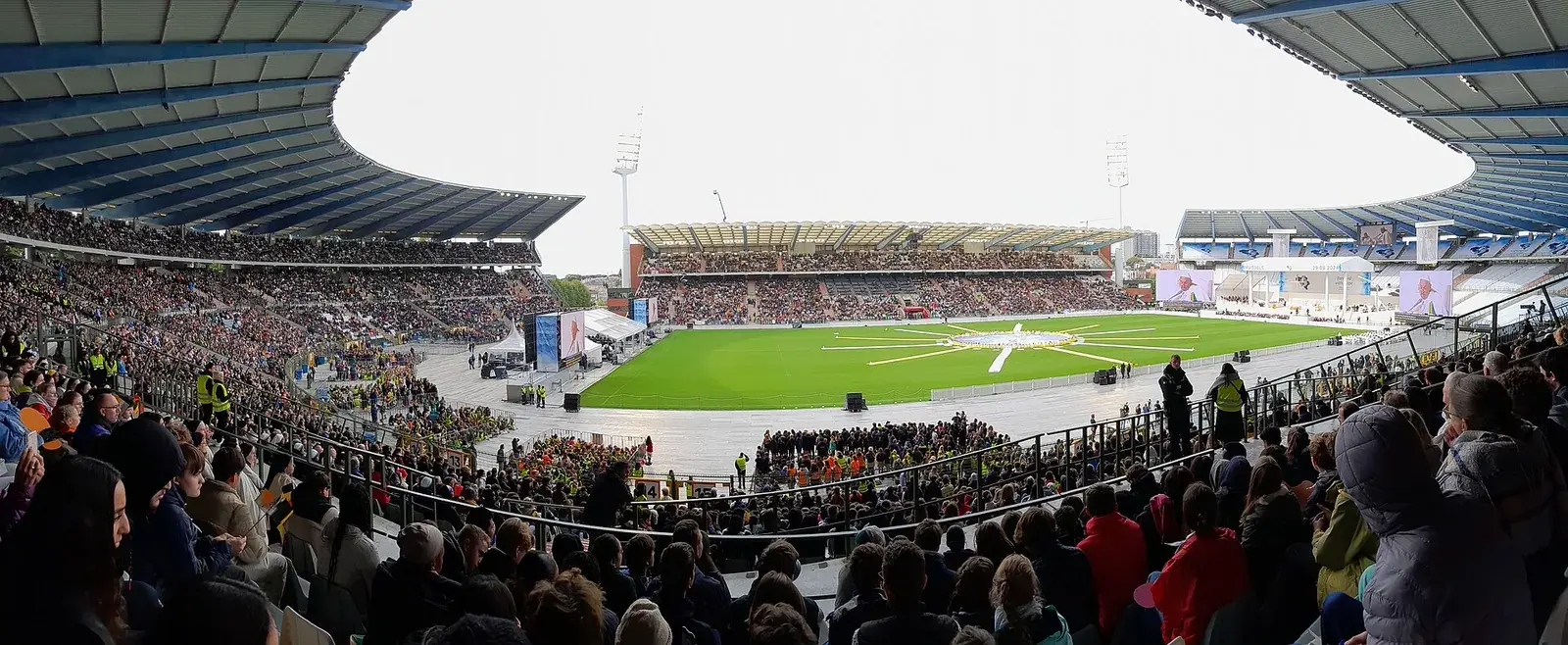
King Baudouin Stadium is a multi-purpose stadium in the Heysel plateau of northwest Brussels, Belgium. With a capacity of 50,093, it is the largest stadium in Belgium and the permanent home of the Belgian national football team. The stadium was built in 1930 to a design by architect Joseph Van Neck and renamed in 1995 in honour of the late Belgian King Baudouin I, who died in 1993.
Location and surroundings
The stadium occupies the Heysel (Dutch: Heizel) plateau in the Laeken district, roughly 6 km north of central Brussels. It shares the site with the Atomium, the Brussels Expo complex, and Bruparck. Metro line 6 stops at Heysel station, providing direct access from the city centre in approximately 20 minutes. The surroundings blend expansive exhibition grounds with parkland and wide avenues.
Main uses
The stadium serves primarily as the home ground for the Belgian Red Devils for both competitive and friendly international fixtures. Beyond football it hosts major concerts and large-scale sporting events. It has functioned as Belgium's principal national arena continuously since its opening in 1930, making it one of the longest-serving national football grounds in Europe.
History
Journey through time
The stadium's history stretches across nearly a century, encompassing celebrated European finals, radical modernisation, and one of the darkest nights in football history.
Construction and early history (1930)
The stadium was inaugurated in 1930 for the Brussels World Exposition, designed by Joseph Van Neck in a neo-classical style with a distinctive colonnade facade. Known initially as the Stade du Centenaire, it quickly established itself as a premier European venue. In 1958 it hosted the European Cup final between Real Madrid and AC Milan (3-2), and in 1966 the final between Real Madrid and Partizan Belgrade (2-1). The stadium became popularly known as Stade Heysel after the surrounding district.
The Heysel disaster (1985)
On 29 May 1985, the stadium became the site of one of the worst tragedies in football history. Before the European Cup Final between Juventus and Liverpool, violence broke out among supporters, causing a retaining wall to collapse. 39 people were killed and hundreds injured. The disaster prompted a five-year ban on English clubs in European competition and triggered fundamental reforms in stadium safety standards across Europe. The UEFA-mandated Taylor Report recommendations for all-seater stadiums can be traced in part to the lessons of Heysel.
Reconstruction and renaming (1995)
Following the disaster the stadium was extensively reconstructed and fully modernised. In 1995 it was renamed Stade Roi Baudouin (King Baudouin Stadium) in memory of the Belgian king who had died in 1993. The rebuilt venue features modern stands, improved sightlines, and up-to-date safety infrastructure, with a seated capacity of 50,093.
Atmosphere
Matchday
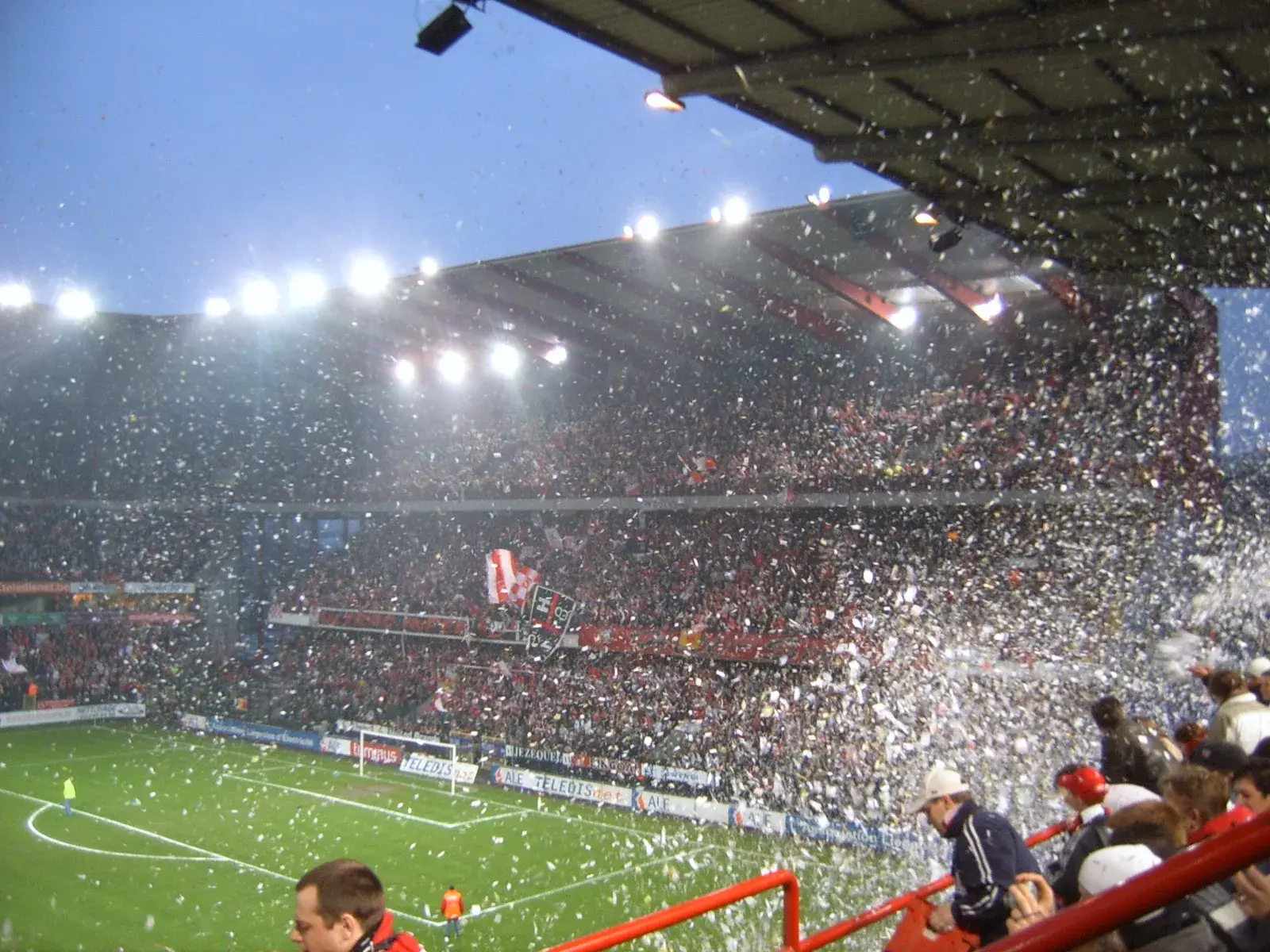
Matchday at King Baudouin Stadium carries a distinctly national character, with supporters from both Flemish and Walloon communities uniting behind the Belgian Red Devils.
Fan culture
The Belgian national team draws passionate support from across the country's linguistic divide. Supporters arrive in the team's red, black and gold colours, and chanting fills the stadium in both French and Dutch — a bilingual atmosphere that is uniquely Belgian. During the golden generation of the 2010s, featuring players such as Hazard, De Bruyne and Lukaku, attendances and enthusiasm surged as Belgium rose to the top of the FIFA world rankings.
Notable matches and moments
The stadium hosted two European Cup Finals: Real Madrid 3-2 AC Milan in 1958 and Real Madrid 2-1 Partizan Belgrade in 1966, cementing its place in the early history of European club competition. The 1985 European Cup Final left a permanent mark on football, and the rebuilt stadium that replaced the condemned original structure carries that memory as part of its identity. The Belgian national team have used the ground for pivotal qualifying campaigns and landmark friendly victories, with major UEFA qualifying matches drawing sell-out crowds throughout the 2010s and 2020s.
Practical info
Visiting the stadium
King Baudouin Stadium is straightforward to reach by public transport from central Brussels, and the Heysel area offers additional tourist attractions for those making a day of the visit.
How to get there
- Metro: Line 6, station Heysel — direct from central Brussels, approximately 20 minutes
- Tram: Lines 7 or 51 with a metro connection available
- Train: Bruxelles-Laeken station, roughly 10 minutes on foot to the stadium
- Car: Via the Brussels ring road (R0) or Chaussee Romaine from the city centre; matchday car parks are available on the Heysel plateau
Tickets and tours
Tickets for Belgian national team fixtures are sold through the Royal Belgian Football Association (RBFA) website. Availability for qualifiers and friendlies is generally good several weeks in advance; knockout or tournament matches sell out faster. The stadium does not offer regular public tours — it functions as a working national arena rather than a tourist attraction.
Visitor tips
- Combine with sightseeing: the Atomium and Mini-Europe are within walking distance, making a full day trip easy
- When to arrive: at least 60 minutes before kick-off; car parks fill quickly on matchdays
- Languages: stadium signage and announcements appear in both French and Dutch; English is widely understood
- Food and drink: kiosks and food stalls operate within the Heysel complex; central Brussels offers far broader dining options a short metro ride away
Clubs & teams
Club history (1)
Map
Where to find the stadium
Rating
Your rating
No ratings yet
Plan your visit
Brusel, Belgium
Accommodation
Booking.com — affiliate ID not configured
Stadium tour
GetYourGuide — partner ID not configured
Match tickets
Ticombo — affiliate ID not configured
Some links are affiliate — if you purchase, we earn a small commission (no extra cost to you).