Agia Sophia Stadium
Foto: Wikimedia Commons contributors · CC BY-SA
- Kapacita
- 32 500
- Postaven
- 2022
- Klub
- —
- Země
- Greece
Přehled
O stadionu
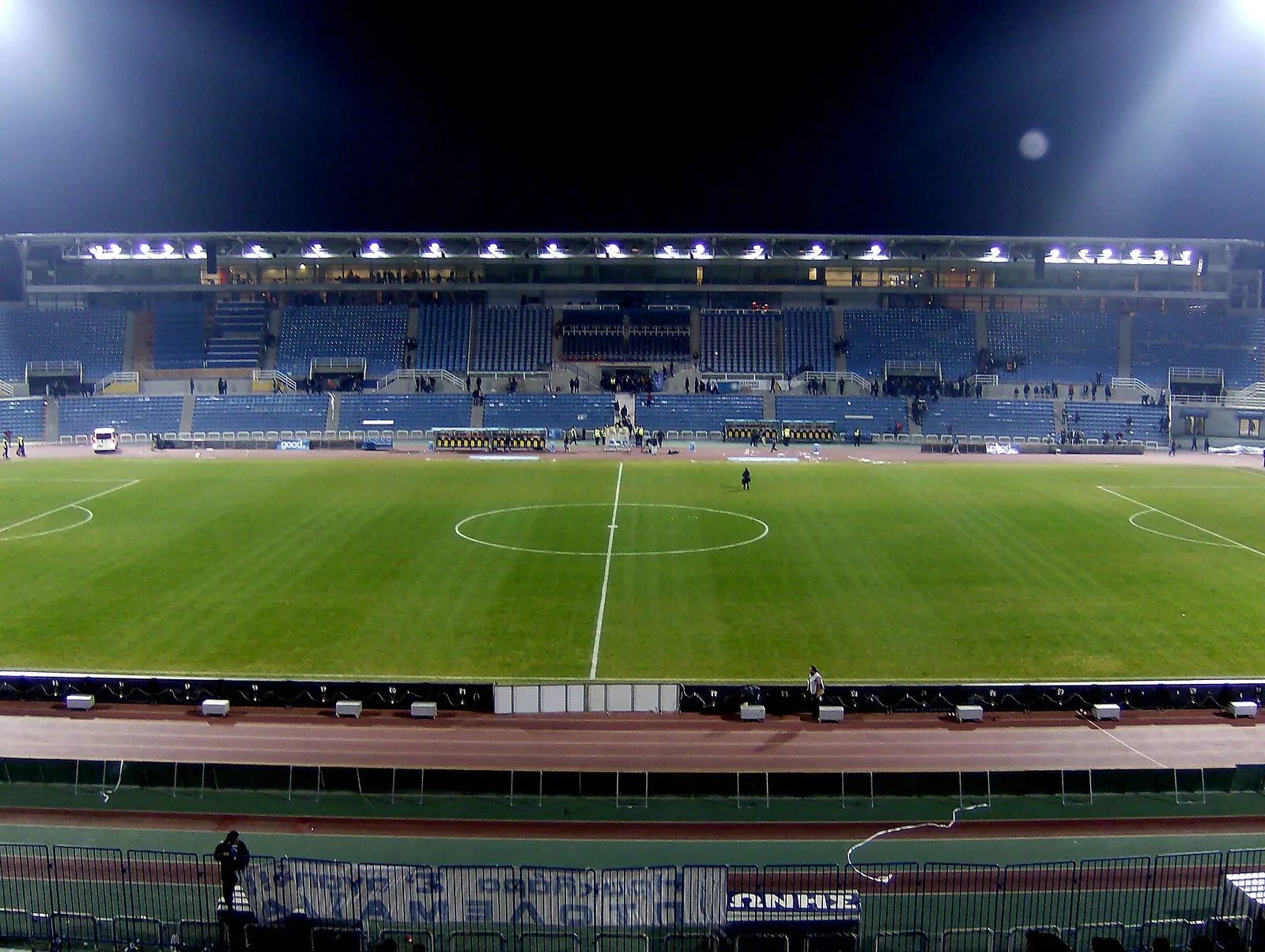
Agia Sophia Stadium, commercially known as OPAP Arena since 2023, is a modern football stadium in the Nea Filadelfeia district of Athens, Greece. It is the home ground of AEK Athens FC, one of Greece's most decorated clubs. The stadium opened in 2022 with a capacity of approximately 32,500 seats, ending nearly two decades during which AEK played as a tenant at the Olympiastadion OAKA.
Name and symbolism
The name Agia Sophia (Αγία Σοφία) references the famous Byzantine basilica Hagia Sophia in Constantinople, today Istanbul. This choice carries profound significance for AEK Athens: the club was founded in 1924 in Cairo by Greek refugees who had been forced to flee Asia Minor following the Greco-Turkish War. The stadium name pays tribute to the Constantinopolitan heritage that defines the club's identity. The Byzantine double-headed eagle in AEK's crest and the stadium's name together link modern football to a thousand-year-old history.
Sponsorship name
Since 2023, the venue carries the commercial name OPAP Arena, after the Greek gaming and sports betting organisation OPAP. Both names are commonly used in parallel.
Historie
Cesta časem
The stadium's story is inseparable from AEK Athens FC's decades-long quest for a home of their own.
AEK Athens and the Nikos Goumas Stadium
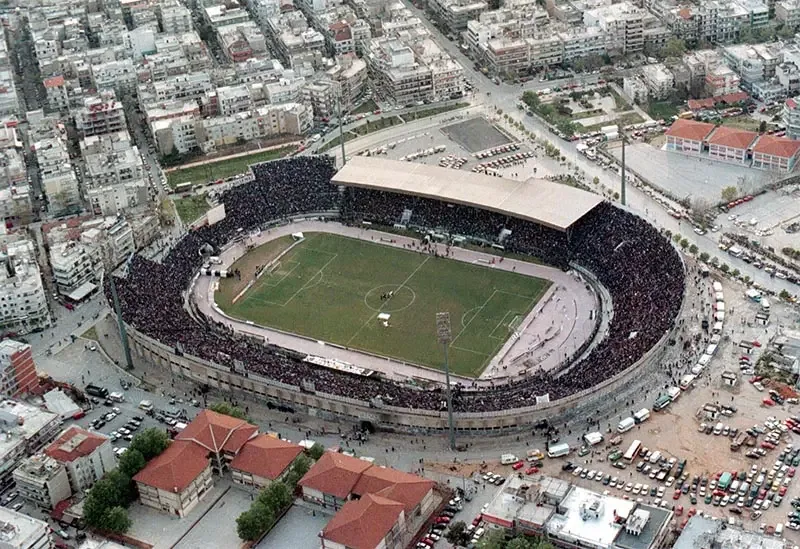
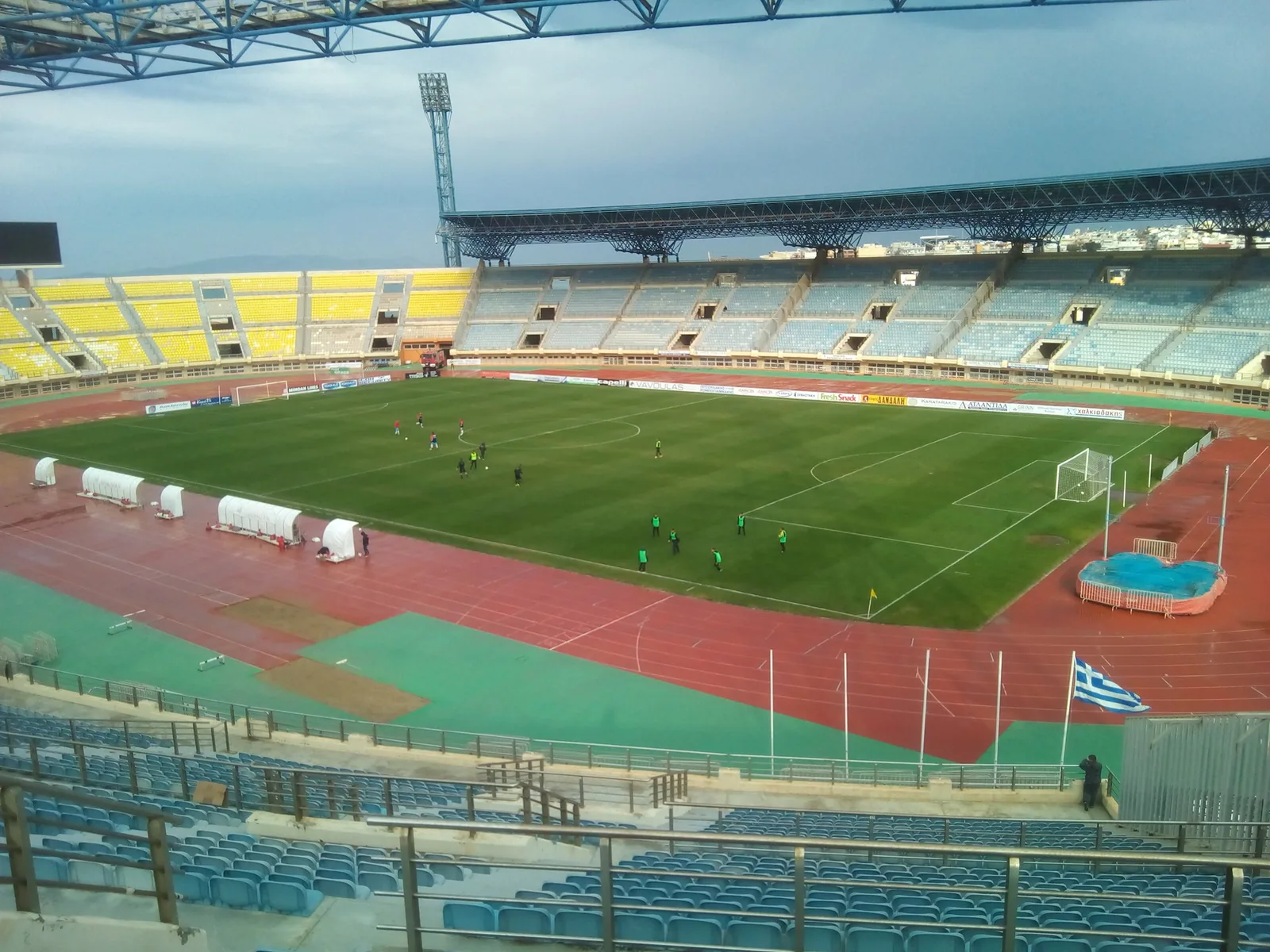
AEK Athens FC was founded in 1924 in Egypt by Greek refugees expelled from Constantinople following the Greco-Turkish War of 1919-1922. The name AEK (Athletic Union of Constantinople) is a direct reference to the lost city. Upon relocating to Athens, the club played at the Nikos Goumas Stadium in Nea Filadelfeia, building a passionate local fanbase over decades. The old ground was demolished in 2003 due to safety and capacity issues, and AEK moved as a tenant to the Olympic Stadium OAKA, where they remained for nearly twenty years.
Construction of Agia Sophia
Plans for a new stadium had circulated since the early 2000s, but the project faced repeated obstacles — financing problems, bureaucratic delays, and local opposition. Construction finally commenced in 2020 on or near the site of the former Nikos Goumas ground in Nea Filadelfeia and took approximately two years to complete. The project was one of the most eagerly awaited in Greek football history.
Opening and first season
The stadium officially opened during the 2022/23 season, marking AEK Athens' long-awaited return to their historic neighbourhood after nearly two decades at OAKA. The symbolism was immense: the club came home. In their first full season at the new ground, AEK Athens won the Greek Super League title.
Atmosféra
Den zápasu
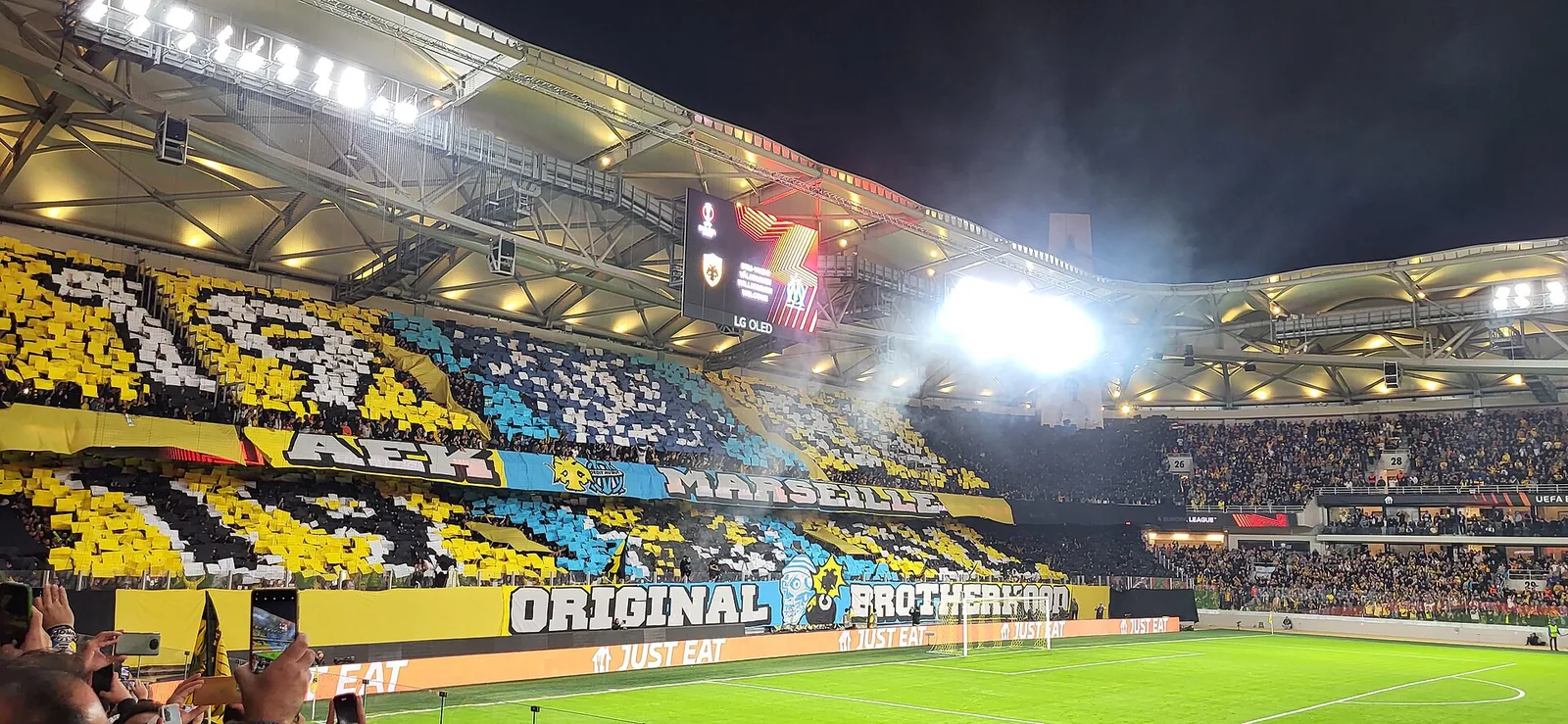
The atmosphere at Agia Sophia ranks among the most intense in Greek football. The compact bowl, holding over 32,000 supporters, concentrates crowd noise and energy in a way that the vast OAKA could never replicate.
Fan culture
AEK Athens supporters are renowned for their passion and loyalty. The ultras group Original 21 is among the most active in Greece. The club's yellow-and-black colours fill the stands for every home match, and the Byzantine double-headed eagle — both the club's crest and the stadium's namesake symbol — provides a powerful visual and emotional identity connecting the terraces to the history of Constantinople's Greek community. Derby fixtures against Olympiacos and Panathinaikos are the season's most explosive occasions.
Homecoming effect
The opening of a purpose-built home after nearly twenty years at OAKA was experienced as a historic moment. Fans for whom Nea Filadelfeia is the authentic heart of the club embraced the new arena with exceptional fervour. Matches at Agia Sophia sell out regularly, and the atmosphere of the opening seasons has been described as among the best in the club's history.
Praktické info
Návštěva stadionu
The stadium is located in the Nea Filadelfeia district of Athens, approximately 10 km north of the city centre.
Getting there
- Metro: Line M1 (green), station Nea Filadelfeia — direct connection from the city centre; approximately 20 minutes from Monastiraki; the stadium is a short walk (under 10 minutes) from the station
- Car: Close to the Attica Odos motorway; on-street and nearby car park options exist, but fill up on matchdays
- Bus: Several OASA bus routes connect the neighbourhood to other parts of Athens
Tickets
Tickets are sold through the official AEK Athens FC website. Super League fixtures are well-attended; derbies against Olympiacos and Panathinaikos are typically sold out. Booking in advance is strongly recommended.
Visitor tips
- Arrive at least 45 minutes before kick-off for security checks
- The neighbourhood around the stadium has a strong local character with tavernas and cafes ideal for pre-match meals
- Wearing yellow and black earns a warm welcome from the home support
- Nea Filadelfeia offers an authentic Athens experience away from the tourist trail
Mapa
Kde najdeš stadion
Hodnocení
Tvoje hodnocení
Zatím bez hodnocení
Naplánuj návštěvu
Athény, Greece
Ubytování
Booking.com — affiliate ID není nakonfigurováno
Stadium tour
GetYourGuide — partner ID není nakonfigurováno
Vstupenky
Ticombo — affiliate ID není nakonfigurováno
Některé odkazy jsou affiliate — pokud nakoupíš, dostaneme malou provizi (cena pro tebe se nemění).